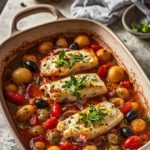

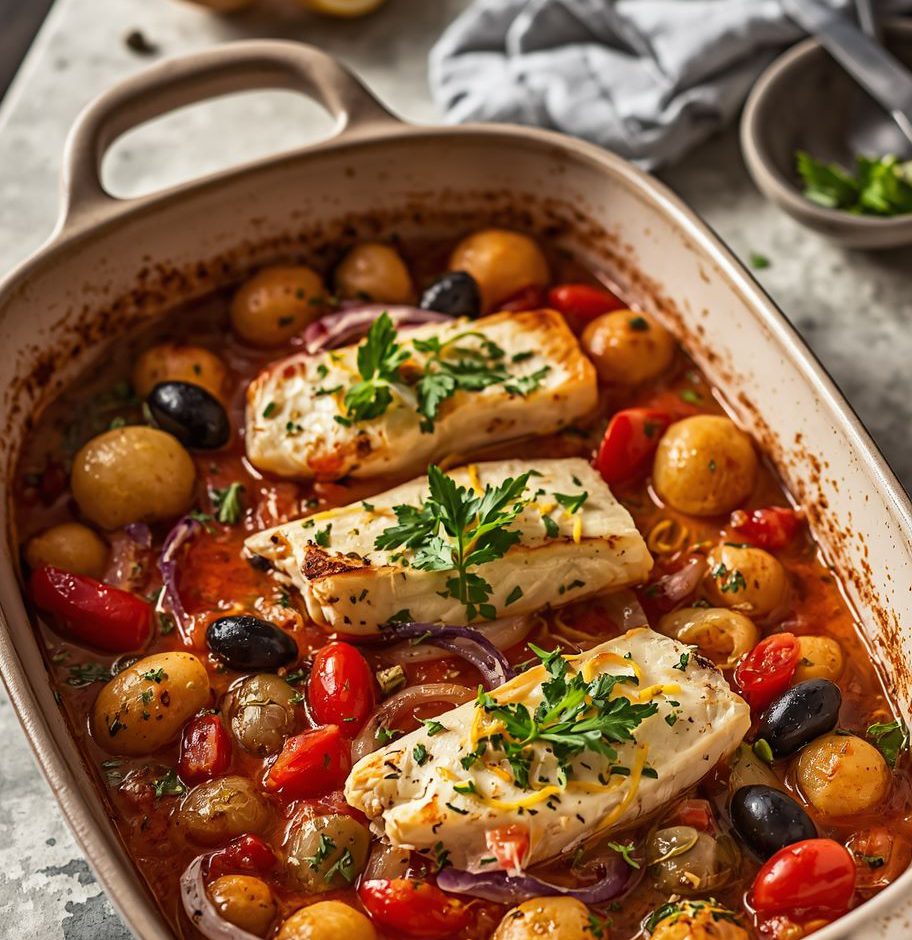
Puttanesca Fish Tray Bake is a bold Mediterranean baked white fish recipe layered with tomatoes, olives, capers, garlic, anchovies, roasted potatoes, and a rich puttanesca-style sauce.
Ready in about 45 minutes, this one-pan seafood dinner delivers restaurant-level flavor with minimal effort: briny, savory, lightly spicy, and beautifully balanced.
Puttanesca Fish Tray Bake: A Bold Mediterranean Baked Fish Recipe
This Puttanesca Fish Tray Bake brings together everything that makes Mediterranean cooking so irresistible: tender white fish, ripe tomatoes, briny olives, capers, garlic, anchovies, roasted potatoes, and good olive oil.
Puttanesca is not a type of fish. It is an Italian-style sauce traditionally made with tomatoes, olives, capers, garlic, anchovies, and olive oil. While it is often served with pasta, its bold, salty, and aromatic character works beautifully with baked white fish.
The key to this recipe is timing. The potatoes roast first, the puttanesca sauce concentrates in the tray, and the fish is added only near the end so it stays moist, delicate, and flaky.
The result is a rustic but elegant tray bake that feels special enough for guests yet practical enough for a weeknight dinner.
Recipe Information
- Prep Time: 15 minutes
- Cook Time: 30 minutes
- Total Time: 45 minutes
- Servings: 4
- Calories: Approximately 420 kcal per serving
- Cuisine: Mediterranean / Italian-inspired
- Category: Main Course
- Main Ingredient: White fish
- Cooking Method: Oven-baked tray bake
- Difficulty: Easy to medium
Why This Recipe Works
The success of this baked fish recipe comes from sequencing. Potatoes need a head start because they require more time and heat than fish. Meanwhile, the puttanesca sauce needs a few minutes in the oven to warm through, reduce slightly, and concentrate its flavor.
White fish is delicate, so it should be added later. This prevents overcooking and keeps the fillets moist and flaky. Instead of drying out, the fish gently cooks over the sauce and vegetables, absorbing the aroma without falling apart.
The sauce also brings natural balance: tomatoes add acidity, olives and capers provide salinity, anchovies create deep umami, garlic adds sharpness, and olive oil rounds everything out.
Ingredients
For the White Fish
- 4 firm white fish fillets, about 150–180 g / 5–6 oz each, such as cod, haddock, halibut, sea bass, hake, or pollock
- 1/2 teaspoon fine sea salt, or to taste
- Freshly ground black pepper, to taste
- 1 tablespoon extra virgin olive oil
For the Puttanesca Sauce
- 400 g / 14 oz canned cherry tomatoes or chopped tomatoes
- 3 anchovy fillets, finely chopped
- 3 garlic cloves, finely minced
- 80 g / 1/2 cup pitted black olives, preferably Kalamata or good-quality black olives
- 2 tablespoons capers, rinsed and drained
- 1 teaspoon dried oregano
- 1/2 to 1 teaspoon red pepper flakes, depending on heat preference
- 3 tablespoons extra virgin olive oil
- 1 teaspoon tomato paste, optional, for deeper tomato flavor
For the Vegetables
- 500 g / 1.1 lb baby potatoes, halved
- 1 medium red onion, thinly sliced
- 1 small red bell pepper, sliced, optional
- 1 small zucchini, sliced into thick half-moons, optional
For Finishing
- Fresh parsley, finely chopped
- Finely grated lemon zest
- A final drizzle of extra virgin olive oil
- Lemon wedges, for serving
Chef Notes on Key Ingredients
White fish: Choose firm white fish fillets that can hold their shape in the oven. Cod, haddock, halibut, sea bass, hake, and pollock all work well.
Anchovies: Anchovies do not make the dish taste aggressively fishy when used correctly. They melt into the sauce and create a deep savory backbone.
Capers and olives: These ingredients are naturally salty, so season carefully. It is better to start with less salt and adjust at the end.
Tomatoes: Canned cherry tomatoes give a sweeter, more elegant result, but chopped tomatoes also work well. If your tomatoes taste too sharp, add a tiny pinch of sugar to balance acidity.
How to Make Puttanesca Fish Tray Bake
Step 1: Preheat the Oven
Preheat your oven to 200°C / 400°F. Use a large roasting tray so the ingredients have enough space to roast instead of steam.
Step 2: Roast the Potatoes First
Place the halved baby potatoes in the tray. Add 1 tablespoon of olive oil, a light pinch of salt, and black pepper. Toss well, then spread them cut-side down where possible.
Roast for 18–20 minutes, until the potatoes begin to soften and develop light golden edges. This first stage is essential because potatoes take longer to cook than white fish.
Step 3: Build the Puttanesca Sauce
While the potatoes roast, combine the tomatoes, anchovies, garlic, olives, capers, oregano, red pepper flakes, olive oil, and tomato paste in a bowl. Stir well.
Taste the sauce before adding more salt. The anchovies, capers, and olives already bring a strong salty backbone.
Step 4: Add the Sauce and Vegetables
Remove the tray from the oven. Add the sliced red onion and any optional vegetables, then pour the puttanesca mixture over the potatoes. Toss gently so the sauce coats the vegetables evenly.
Return the tray to the oven for another 8–10 minutes. This allows the sauce to heat through, reduce slightly, and concentrate in flavor before the fish is added.
Step 5: Add the White Fish at the Right Moment
Pat the white fish fillets dry with paper towels. Season lightly with salt and black pepper, then place them on top of the sauce and vegetables. Drizzle with a little olive oil.
Do not bury the fish under the sauce. Keeping it on top helps it cook gently and prevents it from breaking apart.
Step 6: Bake Until Just Cooked
Return the tray to the oven and bake for 10–12 minutes, depending on the thickness of the fish. The fish is ready when it turns opaque and flakes easily with a fork.
For the best texture, avoid cooking the fish until it becomes dry and firm. Remove it from the oven as soon as it is just cooked through.
Step 7: Finish Like a Chef
Finish the dish with chopped parsley, lemon zest, a final drizzle of extra virgin olive oil, and lemon wedges on the side. Let it rest for 2 minutes before serving so the juices settle.
Chef Secrets for the Best Result
- Use firm white fish: Thin, fragile fillets may overcook or break apart too quickly.
- Layer the cooking: Potatoes first, sauce second, fish last. This protects the texture of each ingredient.
- Respect the salt: Capers, olives, and anchovies are already salty. Season gradually.
- Pat the fish dry: This helps the fish hold its texture and prevents excess water in the tray.
- Do not overcook: Fish continues to cook slightly after leaving the oven.
- Use lemon zest, not too much lemon juice: Zest adds brightness without making the sauce watery or overly acidic.
- Use a large tray: Crowding the ingredients creates steam and prevents roasting.
How to Serve Puttanesca Fish Tray Bake
Serve this dish straight from the tray for a relaxed Mediterranean-style dinner, or plate it individually for a more refined presentation. Place the fish slightly off-center, spoon the potatoes and puttanesca sauce around it, then finish with parsley and lemon zest.
This recipe pairs beautifully with crusty bread, couscous, rice, quinoa, or a simple green salad. For a lighter meal, serve it with steamed greens or roasted asparagus.
Best Pairings
- Bread: Crusty sourdough or ciabatta to soak up the sauce
- Grains: Couscous, rice, quinoa, or bulgur
- Salad: Arugula, cucumber, fennel, or a lemony green salad
- Vegetables: Roasted broccoli, asparagus, or green beans
- Drink pairing: Sparkling water with lemon, Sauvignon Blanc, Pinot Grigio, or a dry rosé
Nutrition and Health Benefits
This Puttanesca Fish Tray Bake fits naturally into a Mediterranean-style eating pattern. It combines lean protein, olive oil, tomatoes, herbs, and vegetables in a balanced dish that is satisfying without feeling heavy.
- White fish: Provides high-quality lean protein and a light texture.
- Tomatoes: Contain lycopene, a natural antioxidant associated with tomato-rich diets.
- Olive oil: Adds heart-friendly monounsaturated fats and improves flavor.
- Capers and olives: Add intense flavor, which helps reduce the need for excessive added salt.
- Potatoes: Provide energy, potassium, and satisfying texture.
Approximate Nutrition Per Serving
- Calories: 420 kcal
- Protein: 35 g
- Carbohydrates: 32 g
- Fat: 18 g
- Fiber: 5 g
- Sodium: Varies depending on olives, capers, and anchovies
Ingredient Substitutions
- No anchovies? Use a small splash of Worcestershire sauce or a teaspoon of miso for savory depth.
- No capers? Add extra olives and a small squeeze of lemon at the end.
- No baby potatoes? Use regular potatoes cut into small chunks.
- Want it low-carb? Replace potatoes with zucchini, cauliflower, broccoli, or green beans.
- Different fish? Use cod, haddock, halibut, sea bass, hake, or pollock.
- Want it spicier? Add more red pepper flakes or a finely sliced fresh chili.
Storage and Reheating
Store leftovers in an airtight container in the refrigerator for up to 2 days. Because fish is delicate, reheat gently.
To reheat, place the leftovers in an oven-safe dish, cover loosely with foil, and warm at 160°C / 320°F until heated through. Avoid microwaving for too long, as it can dry out the fish and make the texture rubbery.
Common Mistakes to Avoid
- Adding the fish too early: This is the fastest way to dry it out.
- Using too small a tray: Crowded ingredients steam instead of roast.
- Over-salting: Always remember that olives, capers, and anchovies bring salt.
- Skipping the potato pre-roast: The potatoes may remain undercooked if everything is baked together from the start.
- Using watery fish: Thaw frozen fish fully and pat it dry before baking.
- Adding too much lemon juice: Too much juice can make the sauce watery and overly sharp. Use zest for brightness.
Frequently Asked Questions
Is puttanesca a type of fish?
No. Puttanesca is not a type of fish. It is an Italian-style sauce traditionally made with tomatoes, olives, capers, garlic, anchovies, and olive oil.
What kind of fish works best for Puttanesca Fish Tray Bake?
Firm white fish works best, such as cod, haddock, halibut, sea bass, hake, or pollock.
Can I use frozen fish for this recipe?
Yes. Thaw the fish completely and pat it dry very well before baking. Excess water can dilute the sauce and affect the texture.
Can I use salmon instead of white fish?
Yes, salmon can be used, but it is richer and oilier than white fish. It may also cook slightly faster depending on thickness.
Can I skip the anchovies in puttanesca sauce?
Yes, but anchovies add the classic savory depth of puttanesca sauce. If you skip them, you can add a small amount of miso paste or Worcestershire sauce for umami.
Is Puttanesca Fish Tray Bake spicy?
It is mildly spicy. You can reduce the red pepper flakes for a gentler flavor or increase them for more heat.
Can I make this recipe ahead of time?
You can prepare the sauce and partially roast the potatoes ahead of time, but the fish should be added and baked just before serving for the best texture.
How do I know when the fish is cooked?
The fish should be opaque and flake easily with a fork. Avoid baking until it becomes dry or tough.
Is Puttanesca Fish Tray Bake gluten-free?
Yes, the recipe is naturally gluten-free as long as all packaged ingredients, such as anchovies and capers, are certified gluten-free if needed.
Can this recipe be made keto-friendly?
Yes. Replace the potatoes with low-carb vegetables such as zucchini, cauliflower, broccoli, or green beans.
What should I serve with Puttanesca Fish Tray Bake?
Serve it with crusty bread, couscous, rice, quinoa, a green salad, or roasted vegetables.
How long do leftovers last?
Leftovers can be stored in an airtight container in the refrigerator for up to 2 days. Reheat gently in the oven to avoid drying out the fish.
Final Thoughts
This Puttanesca Fish Tray Bake proves that simple cooking can still feel sophisticated. With the right sequence, balanced seasoning, and careful timing, a handful of Mediterranean ingredients becomes a bold, nourishing, and memorable seafood dinner.
It is practical enough for a busy evening, elegant enough for entertaining, and flavorful enough to become one of those recipes you return to again and again.